Profile Mapping Fuels Live Adjustments in Football and Racing Markets
Henrik Braun · Nov 22, 2026
Profile Mapping Fuels Live Adjustments in Football and Racing Markets
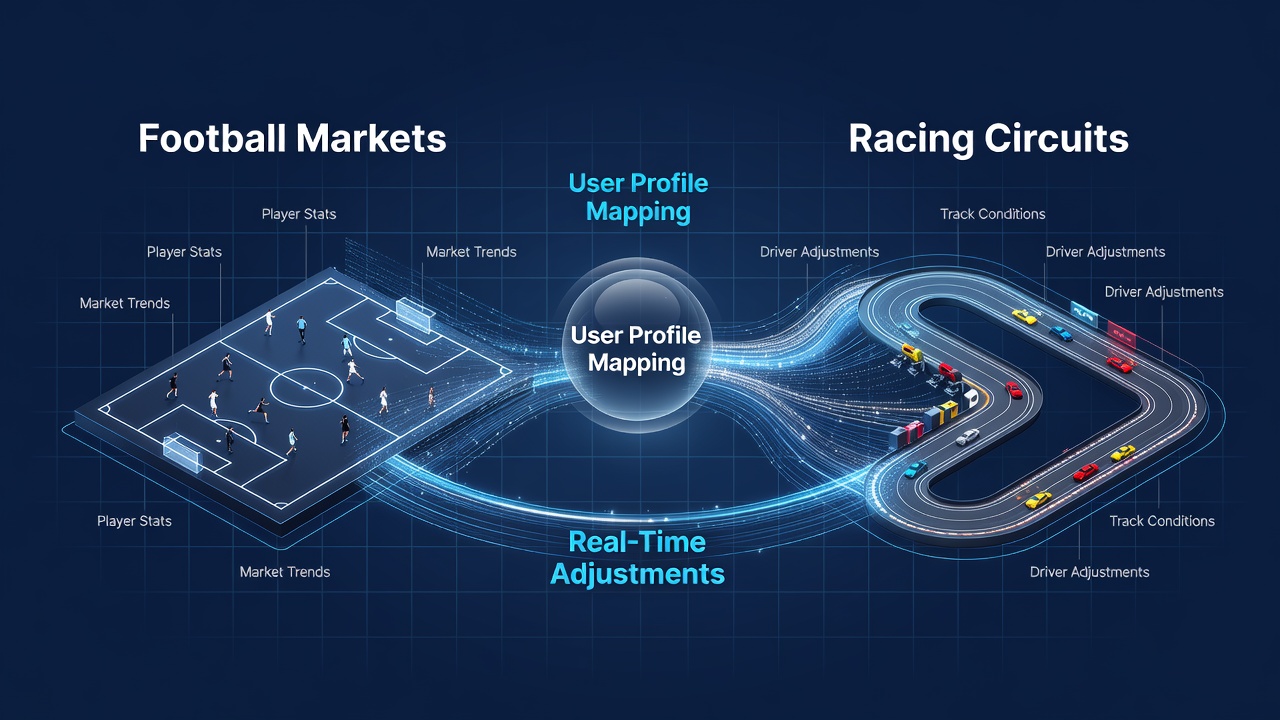
Platforms across football and horse racing betting environments collect detailed user profiles that include past wagers, preferred markets, session durations, and response patterns to promotions, then feed this information into algorithms that trigger instant modifications to odds, stake limits, and bonus offers during live events. These systems operate by cross-referencing behavioral data with current match or race conditions, so that a user who historically favors over 2.5 goals in Premier League fixtures might see adjusted lines appear within seconds of a goal or red card while the same profile receives different prompts during a late-race surge at Cheltenham. Data from multiple operators shows that such mapping reduces average time between bet placement and market refresh by up to 40 percent compared with static systems.
Core Components of Profile Integration
Operators segment profiles into categories such as high-frequency in-play bettors, value seekers who wait for specific odds thresholds, and casual users who respond more to cash-out incentives, then apply these segments to live football markets where goal timing and possession statistics update continuously. In racing circuits the same profiles interact with variables like pace maps, jockey changes, and track conditions that shift rapidly between races, allowing the platform to recalibrate each user’s displayed prices without manual intervention. Researchers at several European institutions note that combining these data streams creates a feedback loop where each wager further refines the profile for subsequent adjustments.
Real-Time Mechanics in Football Markets
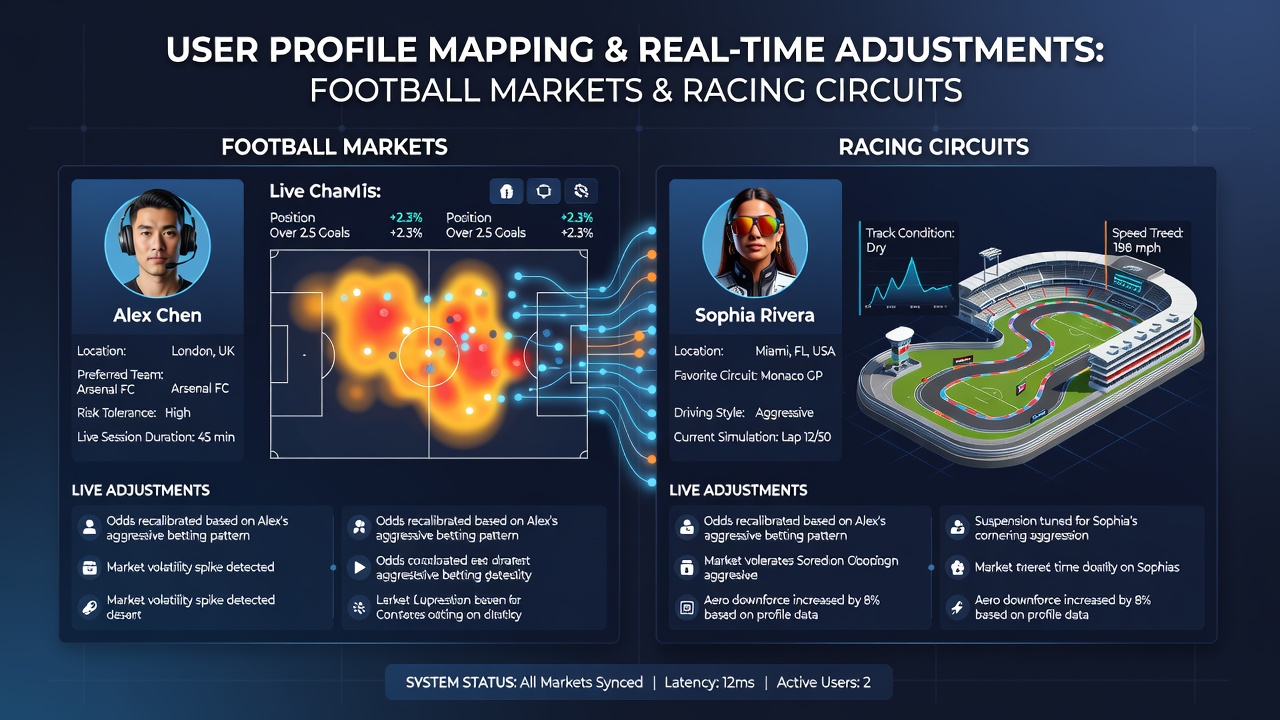
During a typical Premier League match, sensors and official data feeds deliver possession, shot, and expected-goal metrics every few seconds, while the profile engine simultaneously checks whether the user has previously bet on corners or cards in similar scorelines. When patterns align, the system may lower the price on a next-goal market or raise the cash-out value to match observed behavior, and this process repeats across multiple concurrent fixtures without user input. Observers note that November 2026 schedules, with their compressed midweek rounds, have increased the volume of simultaneous live markets, placing greater demands on the mapping infrastructure to maintain consistent response times across thousands of active profiles.
Application on Racing Circuits
Horse racing platforms apply similar logic when a race approaches the final furlong and profile data indicates the user tends to increase stakes on favorites showing strong late acceleration. The algorithm can surface revised place or each-way terms within the same second that official timing data updates, and it may simultaneously suppress offers on longshots for profiles that rarely engage with them. According to figures released by the Responsible Gambling Council of Canada, jurisdictions monitoring real-time racing adjustments report measurable differences in average bet size when profile-driven prompts appear versus generic displays.
Technical Infrastructure and Data Flow
The backbone consists of event-stream processors that ingest both external sports data and internal user actions, then route matched signals to a rules engine capable of executing thousands of micro-adjustments per minute. Profiles are stored in low-latency databases that allow sub-second queries, while machine-learning layers continuously test which mapping rules produce higher retention across segments. Industry reports from the American Gaming Association indicate that operators investing in these layered systems have recorded sustained growth in live-handle share relative to pre-match volumes during the 2025–2026 season.
Regulatory and Operational Considerations
Regulators in several regions require operators to maintain audit trails of every profile-triggered change so that fairness reviews can verify no discriminatory outcomes arise from the mapping rules. Compliance teams therefore log both the input profile attributes and the resulting market output for each adjustment, creating datasets that later support internal model validation. November 2026 updates to cross-border data standards have prompted several platforms to harmonize their logging formats, reducing reconciliation time when multiple jurisdictions review the same event streams.
Conclusion
Mapping user profiles to real-time market adjustments has become a standard operational layer for football and racing betting platforms, driven by the need to match dynamic event data with individual behavioral patterns. The resulting systems process large volumes of concurrent signals while remaining within regulatory audit requirements, and continued refinement of these techniques is expected as fixture calendars and race schedules grow more dense through the remainder of 2026.